
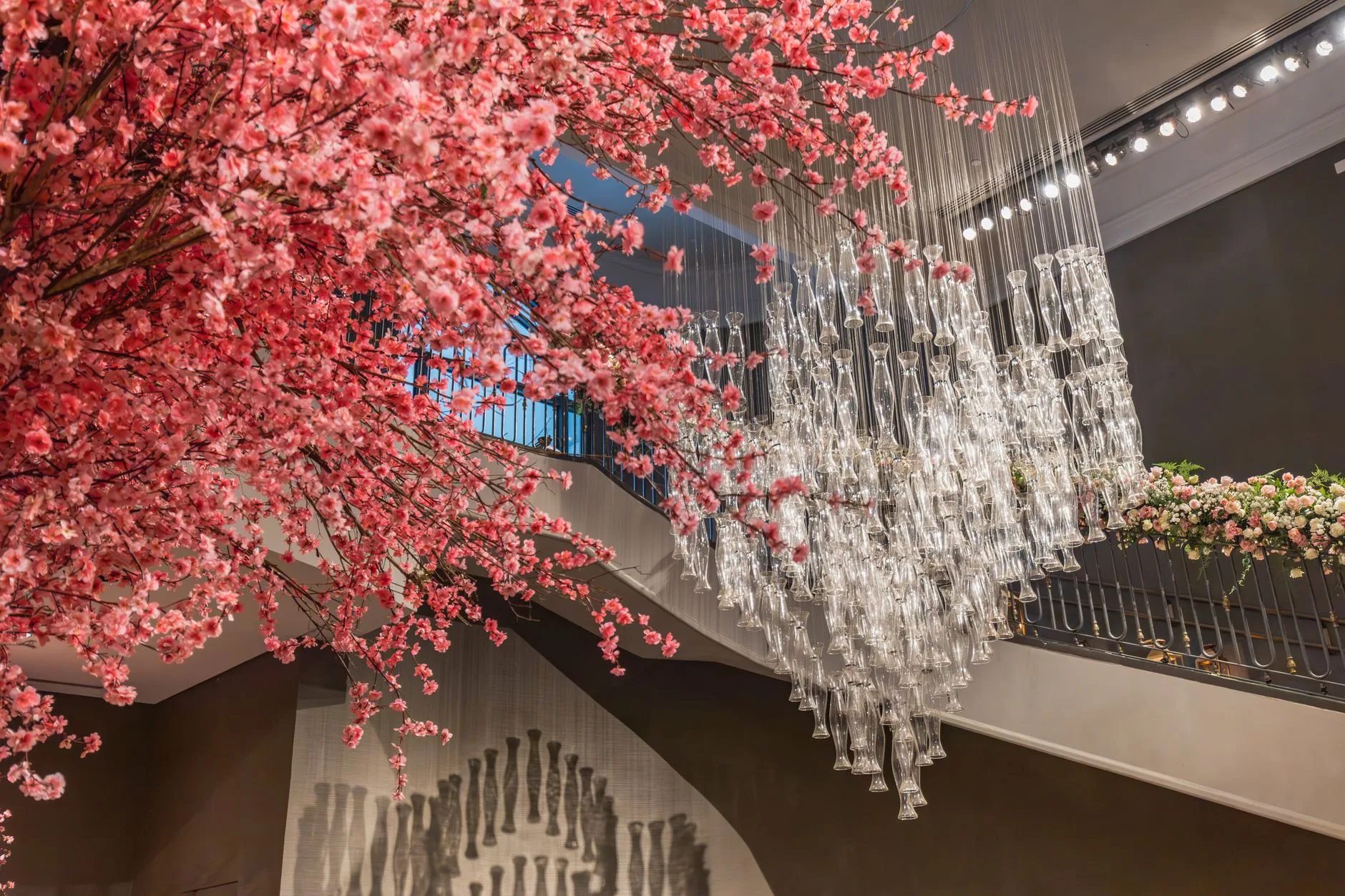
The National Cherry Blossom Festival runs 20 March to 11 April 2027 in Washington, DC. The window is 23 days. The 2027 edition marks the 115th anniversary of the 1912 shipment that started the grove.
The date nobody can set in advance
Peak bloom is the day when 70 percent of the Yoshino cherry (Prunus x yedoensis) blossoms are open. National Park Service horticulturists track the trees through six stages: green buds, florets visible, extension of florets, peduncle elongation, puffy blossoms, peak bloom. They publish the date once it arrives. The range is wide. NPS records peak bloom as early as 15 March, in 1990, and as late as 18 April, in 1958.
Its Bloom Watch page states the constraint that governs a rate plan: “Forecasting peak bloom is almost impossible more than 10 days in advance.”
The record supports a calendar, not a date
NPS publishes every peak bloom date back to 2004. Twenty-three seasons sit in that table.
The mean and the median both land on 29 March. The earliest date in the run is 17 March 2024. The latest is 10 April, in 2014 and again in 2015. Twenty-two of the 23 dates fall inside the festival window. The 2024 bloom is the only one outside it.
The Environmental Protection Agency puts its long-run average at 3 April. It counts peak bloom ahead of that average in 16 of the last 20 years. The last later-than-average date in the Park Service table is 5 April 2018.
The two averages cover different spans. 3 April comes from the EPA record. 29 March comes from the 23 seasons a 2027 guest can price against.
Rank the four Saturdays
The window holds four Saturdays: 20 March, 27 March, 3 April and 10 April. Count how often a season's peak fell within three days of each, using the same 23-season record.
20 March: five seasons. 27 March: eight. 3 April: six. 10 April: four. The counts sum to 23, so every peak in the run landed within three days of one of those dates. 27 March carries the densest adjacency. 10 April carries the thinnest.
One Saturday carries two demand events. The St. Jude Rock ’n’ Roll Washington DC half marathon and 5K run on 20 March, with an 8 a.m. half marathon start at Constitution Avenue and 14th Street NW. The race runs its own official hotel program and publishes start rates of $169 to $369 for the weekend. A property pricing the festival opener competes with a race block on the same night.
Brief the desk on the bloom period
NPS will not put a number on how long the blossoms hold. “The Yoshino trees typically bloom for a period of several days,” its page reads, and it names the reason: cool, calm weather extends the bloom, and a rainy, windy day ends it.
The Festival records the 2026 peak as a period, 26 March to 2 April. The NPS stage table shows the run from green buds to peak bloom at 15 days in 2026 and 39 days in 2018, with a median of 27 across the 23 seasons. A guest asking whether the trees will be out is asking about a window that opens weeks before the first flower.
Train the desk answer on three sentences. Peak bloom means 70 percent open. The forecast holds ten days. The festival window runs 20 March to 11 April.
What to sell across 23 days
Flexible arrivals carry the strategy. A guest booking in January buys a date range. A rate plan that pins one night hands that guest to a property that sells the range.
Hold the four Saturdays at their own rate and fence them off from the flexible inventory. A rate that lets a guest slide a Friday night into a Saturday night without repricing gives away the dates the record says will fill.
Price the cancellation term explicitly. The Festival publishes no bloom guarantee and neither does the Park Service, so the flexible rate is the product the guest is buying. Give the guest the cancel-by date, the penalty and the nightly difference between the flexible and the non-refundable rate in writing.
The Festival Hotel Program
The Festival runs a Hotel Program for properties that want placement in its booking flow. Its hotels page states that applications for the 2027 program will be available in fall 2026, with questions routed to ncbf@ncbfdc.org. Marriott Bonvoy Hotels of Greater Washington is the Festival's preferred hotel provider, with more than 40 participating properties.
A property outside that program still sells the window. It sells it on the dates, the walk to the Tidal Basin and a cancellation term a guest can plan around.
The grove behind the calendar
The 1912 shipment carried 3,020 trees across twelve varieties, 1,800 of them Somei-Yoshino. It arrived in Washington on 26 March. The anniversary gives the 2027 window a package hook and the desk a fact that holds whatever the weather does.
Book the range. Rank the Saturdays. Quote the cancellation date.